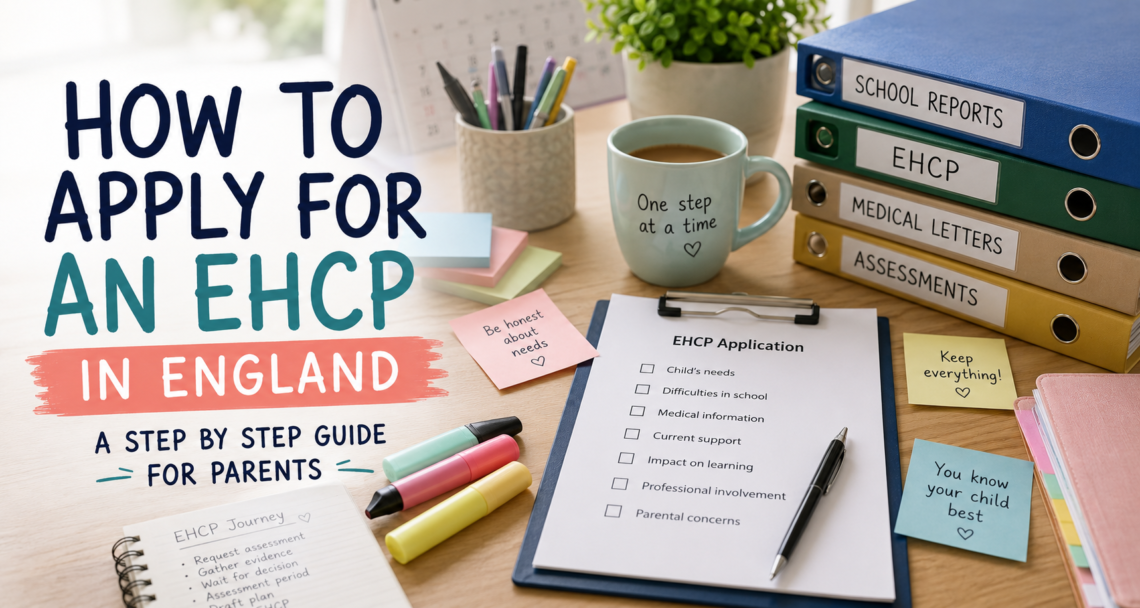
How To Apply For An EHCP In England
If you’ve found yourself searching for how to apply for an EHCP, there’s a good chance you’ve already spent months worrying about your child and wondering whether they’re getting the support they need. Most parents don’t stumble across EHCPs by accident. Usually, you’ve had meetings with school, heard concerns raised by teachers, watched your child struggle, or found yourself constantly fighting for support that never seems to quite happen.
That was certainly the case for me. The first time somebody suggested an EHCP for Zak, I hadn’t even heard of one. It was suggested by his school and his dad, and I remember feeling completely lost because I assumed schools simply provided whatever support children needed. I had no idea there was a separate legal process involved or that parents could actually request an assessment themselves.
The good news is that applying for an EHCP is usually much less complicated than parents expect. The difficult part isn’t the application itself. It’s gathering evidence, understanding what information is important, dealing with the waiting times and trying not to lose your mind under the mountain of paperwork that suddenly appears. Knowing what to expect from the beginning can make the entire process feel far more manageable.
Who Can Apply For An EHCP?
One of the biggest misconceptions surrounding EHCPs is that schools have to start the process. They don’t. While schools can request an Education, Health and Care Needs Assessment, parents have exactly the same right to request one themselves. This is important because many families spend months waiting for schools to take action when they could have started the process themselves.
An EHCP is designed for children and young people whose needs cannot be met through ordinary SEN Support alone. This doesn’t mean a child has to have a particular diagnosis or fit neatly into a specific category. What matters is whether they require additional support to access education.
A lot of parents also worry about diagnoses. Zak already had an autism diagnosis when we applied, but he had not yet been diagnosed with ADHD. You do not need a diagnosis to apply for an EHCP. A diagnosis can provide useful evidence, but the application is based on your child’s needs, not a diagnostic label. If your child is struggling in school, requires significant support, or is unable to access learning in the same way as their peers, an EHCP may be worth exploring regardless of where you are in the diagnostic process.
How To Apply For An EHCP Assessment
The first step is requesting an Education, Health and Care Needs Assessment from your local authority. Every council has its own way of handling requests. Some use online forms, some have SEND portals and some still accept written requests. In our case, everything was completed online.
The application itself was fairly straightforward. What took far longer was gathering all the information needed to support it. Once you start the process, you quickly realise that you’re not just filling in a form. You’re building a picture of your child’s life, their difficulties, the support they’ve already received and why further support is needed.
When completing the application, you’ll normally be asked to provide information about:
- Your child’s educational needs
- Their difficulties in school
- Any medical or developmental conditions
- Support currently in place
- The impact their needs have on learning
- Professional involvement
- Your concerns as a parent
The biggest lesson I learned during this stage was simple. Keep absolutely everything. Every email, every report, every meeting note, every assessment, every appointment letter and every piece of communication from school should be saved somewhere. At the time, some of these documents can seem completely irrelevant. Months later, they can become vital evidence supporting your application. If I could go back and tell myself one thing before starting the EHCP process, it would be to create a folder and throw every single piece of paperwork into it.
What Evidence Do You Need For An EHCP Application?
One of the most common questions parents ask is what evidence they need to apply for an EHCP. The answer is usually more than you think and less than you fear.
Many parents assume they need stacks of specialist reports before they can even begin. In reality, you probably already have useful evidence sitting around your house or stored in your email inbox. Schools, healthcare professionals and parents all provide valuable information that helps the local authority understand a child’s needs.
Useful evidence can include:
- School reports
- SENCO reports
- Educational psychologist reports
- Medical letters
- Autism assessments
- Occupational therapy reports
- Speech and language reports
- Attendance records
- Behaviour records
- Parent observations
- Meeting notes
- Professional assessments
The most important thing is being honest. Parents often minimise difficulties because we’ve become so used to adapting our lives around our children. What feels normal to you may actually demonstrate a significant level of need. Don’t write the application based on your child’s best days. Write it based on the support they genuinely need. The local authority cannot make decisions based on information it doesn’t have, so this is not the time to downplay challenges.
What Happens After You Submit An EHCP Application?
After the request has been submitted, the local authority has six weeks to decide whether it will carry out an Education, Health and Care Needs Assessment. This is often the first major waiting period and can feel frustrating because everything suddenly goes quiet after weeks of gathering information.
Thankfully, our request was agreed without any arguments or appeals. Not every family has that experience, and some parents receive a refusal at this stage. If the local authority agrees to assess, the process moves on to gathering information from professionals involved with your child.
This usually includes advice from:
- Teachers
- SENCOs
- Educational psychologists
- Healthcare professionals
- Therapists
- Parents
The purpose of this stage is to build a detailed understanding of your child’s needs across education, health and daily life. During this period, you may receive more forms to complete, requests for additional information and updates from various professionals. It can feel like paperwork has suddenly become a full time job.
How Long Does An EHCP Application Take?
One of the first things parents want to know is how long the process takes. The legal EHCP timescale is 20 weeks from the initial request to the final EHCP being issued. That sounds reasonable until you’re actually living through it.
When your child needs support, twenty weeks can feel like forever. You’re attending meetings, filling in forms, gathering evidence and waiting for decisions while still dealing with the day to day challenges that made you apply in the first place.
The timeline generally includes:
- Requesting an assessment
- The six week decision period
- Professional advice being gathered
- Draft EHCP preparation
- Parent comments on the draft
- The final EHCP being issued
Even when everything runs according to the legal timetable, the process can feel painfully slow. One of the biggest surprises for me was just how much waiting was involved. I expected forms and meetings. I didn’t expect so many periods where nothing seemed to happen while paperwork worked its way through the system.
Common EHCP Application Mistakes Parents Make
Looking back, there are a few things that seem to catch almost every parent out during the application process. The first is assuming somebody else is keeping records. Schools keep records, professionals keep records and healthcare providers keep records, but you should always keep your own copies too. Never assume you’ll be able to get hold of something easily later.
The second mistake is downplaying difficulties. Most parents spend years focusing on their child’s strengths and finding ways around challenges. Unfortunately, an EHCP application requires you to explain where support is needed. Being honest about difficulties isn’t being negative. It’s providing an accurate picture of your child’s needs.
The third mistake is throwing away paperwork. I know I’ve already said it, but it’s genuinely the biggest piece of advice I can give. Keep everything. Save emails. Save reports. Save meeting notes. Save letters. Save assessments. The amount of evidence involved in the EHCP process was one of the biggest surprises for me, and there were countless occasions where an old document suddenly became useful.
What If Your EHCP Application Is Refused?
Receiving a refusal can be incredibly upsetting, particularly after spending so much time gathering evidence and completing forms. However, it’s important to remember that a refusal does not automatically mean your child doesn’t need support.
Parents have the right to challenge decisions, request further consideration and appeal where necessary. Many families eventually secure an EHCP after initially being told no. If your request is refused, take time to understand the reasons given, review the evidence available and consider what additional information may strengthen your case.
Most importantly, don’t assume a refusal is the final answer. Many successful EHCP applications begin with a refusal.
Final Thoughts On Applying For An EHCP
Applying for an EHCP can feel overwhelming when you’re standing at the beginning of the process. There are forms to complete, evidence to gather, professionals to speak to and deadlines to keep track of. At times it can feel like you’ve accidentally taken on a second job.
The biggest things I’d tell any parent starting this journey are to keep every piece of paperwork, be honest about your child’s needs, and don’t assume you need a diagnosis before applying. Those three things alone would have saved me a huge amount of confusion when we first started.
Most importantly, remember that nobody knows your child better than you do. Reports, assessments and professional opinions all matter, but so does your experience as a parent. You’ve been living this every day. Your knowledge matters, your concerns matter and your voice deserves to be heard throughout the entire EHCP process.
Frequently Asked Questions About Applying For An EHCP
Can I apply for an EHCP myself?
Yes. Parents can apply for an EHCP themselves without waiting for the school to do it. While schools can request an Education, Health and Care Needs Assessment, parents have exactly the same right to contact their local authority and start the process.
Do I need a diagnosis to apply for an EHCP?
No. You do not need an autism, ADHD or any other diagnosis to apply for an EHCP. The decision is based on your child’s needs and the support they require in education, not whether they have a particular diagnostic label.
How do I apply for an EHCP?
To apply for an EHCP, you need to request an Education, Health and Care Needs Assessment from your local authority. Most councils allow parents to do this through an online form, SEND portal or written request.
What evidence do I need for an EHCP application?
Useful evidence can include school reports, SENCO reports, medical letters, autism assessments, attendance records, behaviour records and parent observations. The aim is to show how your child’s needs affect their education and why additional support is required.
What should I include in an EHCP application?
An EHCP application should include information about your child’s educational needs, difficulties at school, medical conditions, current support, professional involvement and the impact their needs have on learning.
How long does an EHCP application take?
The legal EHCP timescale is 20 weeks from the initial request to the final EHCP being issued. This includes the assessment request, professional reports, draft EHCP and final plan.
How long does the local authority have to decide whether to assess?
A local authority has six weeks to decide whether it will carry out an Education, Health and Care Needs Assessment after receiving a request.
Can a school refuse to apply for an EHCP?
A school can decide not to make a request itself, but parents can still apply directly to the local authority. You do not need a school’s permission to request an Education, Health and Care Needs Assessment.
What happens after an EHCP assessment is agreed?
Once an assessment is agreed, the local authority gathers information from professionals involved with your child. This may include teachers, SENCOs, educational psychologists, therapists and healthcare professionals before deciding whether an EHCP should be issued.
What happens if my EHCP application is refused?
If your EHCP application is refused, you have the right to challenge the decision. A refusal does not mean your child does not need support, and many families successfully secure an EHCP after appealing or providing additional evidence.
Can a child with autism get an EHCP?
Yes. Many autistic children have EHCPs, but an autism diagnosis alone does not automatically guarantee one. The local authority will look at the child’s individual needs and whether they require support beyond what a school would normally provide.
What is the most important advice when applying for an EHCP?
The most important advice is to keep every piece of paperwork. Save reports, emails, assessments, meeting notes and letters from school or professionals. Evidence that seems unimportant now may become extremely useful later in the EHCP process.
Discover more from Miss Pork Pie
Subscribe to get the latest posts sent to your email.

6 Summer Workout Wardrobe Essentials

You May Also Like

3 Tips for Dealing With Complex Situations More Effectively

What To Look For When Buying A Used Car